Getting Out of the Bubble

When you live and breathe one industry for most of your professional life, what happens?

Usually you end up living in a bit of a bubble.  That bubble is reinforced when your friends, peers and colleagues are in the same industry.  This is dangerous because it changes your perception of reality.

I recently moved from being a developer in the tech industry to being a techie in the publishing industry.  Here are a few of the many things I have had to learn so far:

  • JUST SHIP IT: In software development, even when you’re trying to ship a product and the deadline has slipped and it’s massive panic all around, there still comes a time when people staying awake and checking in code does more damage than good.  You tell everyone to go home, get some sleep and come back in the morning to finish the work.  In publishing, there is no concept of go-home-before-you-do-more-damage.  There is only the concept of the publisher’s deadline.  Which is gospel.  You stay until it’s published.

Photo courtesy of delgaudm

                                        [Photo courtesy of delgaudm]

  • – NEW/SHINY == BAD: In the tech world, you can throw a new system, framework, device or design at people and they’ll intuitively figure out how it works.  In the publishing world, people rely a great deal on their systems working the same way.  You cannot introduce changes or features without ample training and/or documentation or you risk a massive productivity loss.
  • MY PHONE ISN’T BROKEN, THE SITE IS: Techies generally keep their software and devices up-to-date.  We’re interested to know if the new features are good, if performance is improved or if security holes are fixed.  Outside of the tech world, many people don’t update because they don’t know they can or they don’t know how or, more often, they just don’t care.  Telling people to upgrade their iPhone software can come across as an insult instead of the helpful tip you thought it would be.

Why does any of this matter?

image

                                    [Photo courtesy of shutterbc]

Living and working inside a bubble helps us to forget who our customers really are.  I observed this in my first full-time job working on a brand new development framework at Microsoft (codename Avalon, now WPF).  We spent months designing and architecting cool API test harnesses which dynamically integrated all APIs and extrapolated every possible combination of values.  It was a tough piece of work but no one else had done it, and we were so proud.

Walking into a meeting with the other 100 people on the team, we sat down ready to hear praise for our unprecedented and forward-thinking accomplishment.  Instead, the director got in front of us, said nothing and opened his laptop.  He opened Visual Studio, selected “Create new Avalon project” and hit F5 to compile and run.  Visual Studio crashed.  In all our discussions about ascertaining perfect quality, we hadn’t once thought about who was going to use the framework and what their process would be like. We failed.  From then on, at least 50% of my time was spent testing by “using the product as a customer.”  We shipped a much better product because of that change.

As G.I. Joe used to say, “Knowing is half the battle.”  Knowing you are in a bubble is the first step towards being able to change your behaviour and do the right thing for whoever your customers are.  My customers right now are editors, copy chiefs, photography editors and print designers.  I still have a lot to learn, but each time I observe their work styles and habits, I can creep a little bit more out of my bubble and build a little bit better software for them to use.

2011: Back to Work

Funemployment is over.  I have work to do.

I made the decision last summer, when I was starting to look at new jobs, that I no longer wanted a full-time, all-consuming job.  I made a list of what I wanted, and it looked like this:

– Time to work on my own projects (2 days a week)
– Time to continue my graduate course work in computational linguistics and data visualisation (1 day a week)
– Working from home
– Working with smart people from whom I can learn loads
– The opportunity to teach others
– Cutting-edge technology
– Work in areas I’m passionate about: media, publishing, mobile, news
– Ability to continue to travel
– Complete ownership of my schedule
– Last but not least: stay in Ireland (at least until my visa runs out!)

I might be the luckiest person I know – things are working out great so far.  Here’s what I’m working on:

National College of Ireland

LECTURING: I have accepted a part-time lecturing position at the National College of Ireland for the Advanced Rich Internet Applications piece of their new MSc in Web Technologies program.  I start at the end of January, and I can’t express how much I’m looking forward to it.  During my time at Microsoft Ireland, my absolute favourite part of my job was being able to take small groups of developers and teach programming concepts and new technology designs.  I love teaching, so I can’t wait to get started.

PERSONAL PROJECTS: I’m continuing to work on my own projects, which are small prototypes that I will probably blog about later. 

Nomad Editions

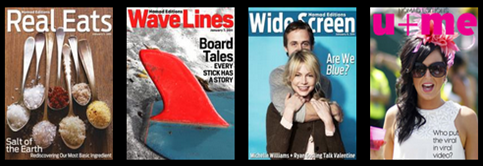
NEW TECHNOLOGY: And lastly but most exciting, I’ve joined the team at Nomad Editions as their tech lead.  I can’t think of an area I’m more passionate about right now than digital magazines.  I’ve been a magazine junkie my whole life, and what magazines are doing with their digital versions is absolutely breaking my heart.  Nomad Editions is a mobile-focused start-up based in New York doing the right thing for magazine and news readers as well as anyone who loves narratives and storytelling.  Nomad Editions are small, focused weekly magazines downloaded to your desktop/laptop/phone/tablet/device that look amazing, no matter how you’re reading them. 

If you are a foodie, a surfer or a film buff, you can sign up for the free beta trials now at http://nomadeditions.com.  Or follow us on Twitter at http://twitter.com/readnomad (each magazine has its own feed as well which I’ve listed here: http://twitter.com/martharotter/nomadeditions-15).  Working with fantastically smart people like Petr van Blokland, Roger Black, Filipe Fortes and the superstar Nomad team means I’m learning all the time from the best of the best, which is an unbelievable opportunity.

Nomad Editions Magazines 

Nomad Editions runs on top of Treesaver technology, designed and built by Filipe Fortes.  Treesaver is what makes Nomad work cross-browser/cross-platform/cross-device and look amazing the whole time.  To learn more about Treesaver, you can follow @trsvr on Twitter.  This video interview with Robert Scoble gives an excellent overview of Treesaver’s origins and how it works: Treesaver Shows HTML5 Can Hold its Own Against Flipboard-style Design.


So that’s what I’m up to for the next few months.  I’ll be in New York city next week for some new Nomad Editions developments and I’ll definitely have some news to blog about after that.

Funemployment

Funemployment [fuhn-em-ploi-mənt] –noun :
     The art of making unemployment fun.

Funemployment took me from my return from Nepal and Tibet through the holiday season & new year.  I can’t recommend it enough.  Up until this break, I haven’t ever not worked since I was about 16.

You know those projects that build up?  Sometimes they’re silly things like organize my desk, get rid of books I don’t read anymore, de-clutter the cupboards, redesign my blog. 

Everyone has these. 

For me, they’re more often than not along the lines of, “What if my Lego Mindstorms robot could place a beer on my Roomba, and the Roomba could drive it over to me?”  or “What if my refrigerator were smart about its inventory and could let me know what I needed to buy and when?” or “What if I could correlate eating certain things to feeling a certain way?”  They’re not lifelong quests, usually just short projects.  But they are things that a) pile up over time and b) I never have had time for due to having a time-consuming job.

Funemployment, as it turns out, is a great time to take care of those things.

I travelled to Nepal and Tibet, which I’ve already written about, but also to Spain, Paris, New York and home to St. Louis to celebrate Thanksgiving with my family.  I worked on three mobile applications I have wanted to build for a long time.  I starting creating my own company for contract and consulting work.  I streamlined my home office and picked up some new tech and gadgets.  I began learning new styles of cooking including Mexican, Southern American, Japanese and slow-cooking.  I reorganized closets, recipes, books, CDs, the whole kitchen, and basically the entire house.  I went out a lot.  I stayed home a lot, too.  I spent lots of quality time with family and friends.  I became obsessed with my Xbox Kinect and the opportunities it presents.  I tried new restaurants and new cafes.  I stitched up all my socks with holes in them (I’m very proud of this one).

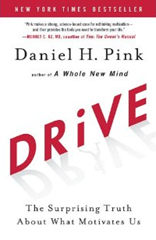
And I read.  A lot.  I constantly tear through magazines, and I found some new ones to fall in love with.  During Funemployment I read mostly technology books, but also non-fiction and some good fiction as well.  I have a few books I will review on the blog later, but  I want to call out one specifically here: Drive: The Surprising Truth About What Motivates Us by Daniel Pink.  Having led technology teams before, I was already well aware that money is a poor motivator and that autonomy, trust and respect are much more useful in helping someone develop and produce great work.  However, this book goes beyond that, with fascinating real-life examples and insightful ideas to consider in terms of motivating both yourself and your team.  A great summary video of the book was done by RSA Animate and can be found here.

image of Drive book

But my favourite takeaway from Drive is a concept called “The Sagmeister.”  Pink named the concept after designer Stefan Sagmeister who closes his shop every seven years and takes a 365-day sabbatical.  The idea is that since retirement is very far away, wouldn’t it be great to intersperse it with our normal life?  Pink writes about Sagmeisters and Stefan’s TED talk here on his blog.  I read this book during a day-long bus ride from Kathmandu to Pokhara, where we were going to start our trek.  At the time, Sagmeisters seemed like a luxurious and frivolous idea.  Definitely something that would be impossible to do if you had a career in a fast-paced field like technology.  After several long days of hiking and loads of time to think, I concluded it was completely reasonable and probably highly useful.  I even calculated how much I’d need to save per month to make this happen five years from now.

Mostly, it made me realize that I, not Stefan Sagmeister, was the crazy one for waiting until now to take some time off.  I really treasured those couple of months and highly recommend it to anyone.

Leaving the ‘Soft

Nine-and-a-half years is a long time to spend doing anything.  It never felt like that much time, because I did such wildly different things at Microsoft.  From testing the object model of Internet Explorer as a college intern to building automation harnesses for API testing of Windows Presentation Foundation to helping architect and build the QA foundation for Silverlight to evangelising a very wide range of developer-focused technology, almost every single day was different at Microsoft.

It’s still strange to think that just over ten years ago, I would have been shocked if anyone would have predicted I’d take a full-time job at Microsoft.  I spent most of my college years writing Perl and C, creating HTML & Javascript-based websites, and admining Linux servers.  I ran my university’s students server, providing hosting and maintenance as well as website creation services for student organizations.  I had a Commodore 64 until I went away to college, and in college I used almost exclusively Linux and Mac OS.  I never used Windows much until I started my internship in Redmond in 2000.

It remains a mystery to me how I got that phone call about interviewing for Microsoft in the first place.  After a surprisingly fun phone interview, I flew to the west coast for the first time in my life.  In my head, I was getting a free trip to Seattle, and all I had to do was talk to some geeks about code for a day.  After a full day of interviews I had two problems: 1) I was so mentally exhausted that I was too tired to visit the Space Needle and 2) I loved it.  How was I supposed to go back to Missouri and tell my Linux friends that I was going to take an internship at Microsoft?

Obviously I survived those conversations.  During my internship, I fell in love with the company and accepted a full-time job offer.  I loved that I could use any technology I wanted (until I moved to Ireland, I still wrote a ton of Perl and Python and built most things on the command line).  I loved the amazing hallway conversations we’d randomly have about tough programming issues.  I loved that all the techie folks I worked with “got me”, had the same sense of humour, were quirky and fun and hilarious.  And I loved that since Microsoft had offices everywhere, I was able to stay with the company and move abroad, something I had been wanting to do for years.  Microsoft is an outstanding company to work for in every respect.

All this goodness, and now I’m walking away.

It’s not about Microsoft technology, people, corporations, customers or anything like that.  It’s just about being a developer who loves learning and wanting to continue building my skills and growing my experience.  It’s time to do something different.  I’m not sure what it will be, but it will definitely involve creating cool, cutting-edge technology that I can share and learn from.

First of all, though, I’m headed on holidays to Nepal and Tibet for three weeks to take some down time and enjoy an exciting part of the world I’ve always wanted to see.

See you back in Dublin in a few weeks.